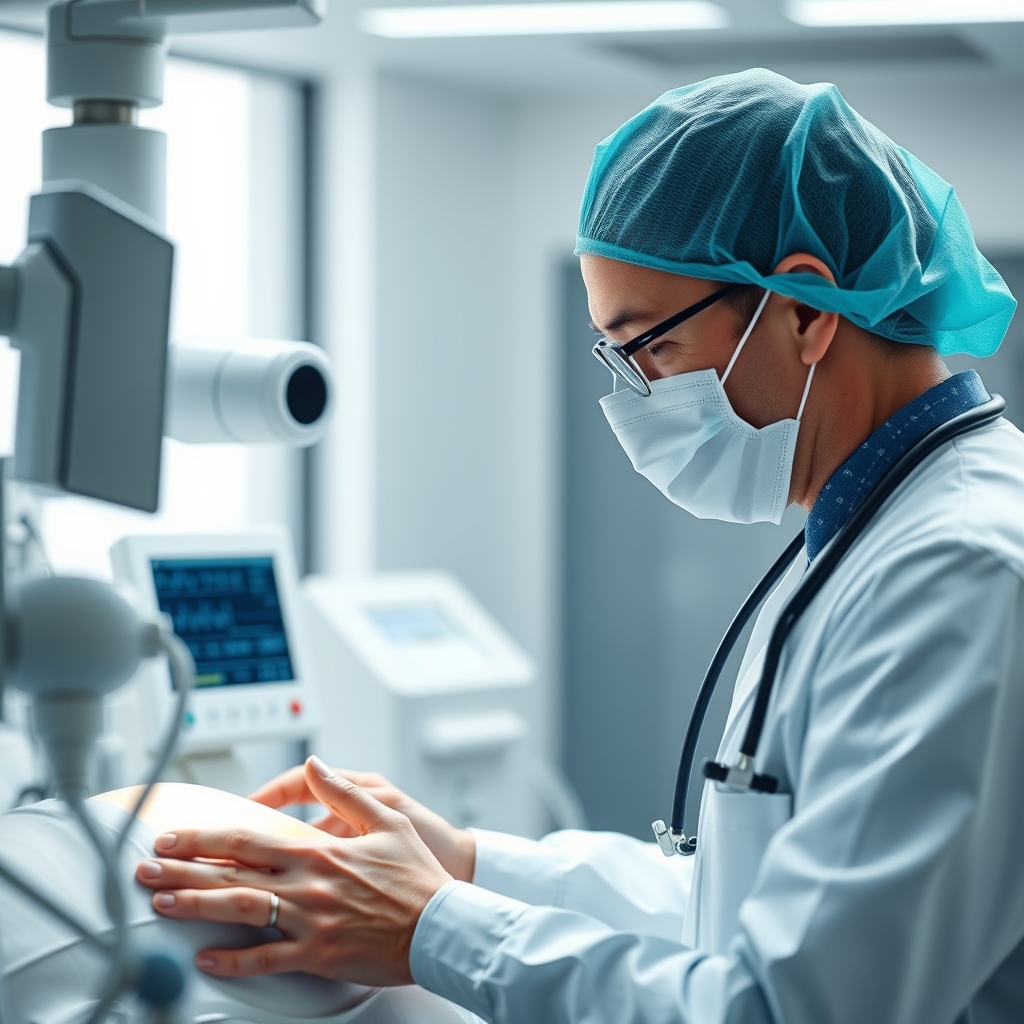
AI-Enhanced Robotic System Redefines Precision for Deep Brain Stimulation Implants

Quick Answer
A new AI-enhanced robotic system is transforming Deep Brain Stimulation (DBS) implants, offering unprecedented precision. This breakthrough may reduce surgical risks and could improve outcomes for patients with movement disorders, marking a significant step towards safer, more effective neurosurgery.
Medically Reviewed by Dr. Anya Sharma, MD, PhD, Neurosurgeon and Director of Neuromodulation | Updated August 8, 2026
Quick Answer: A new AI-enhanced robotic system is transforming Deep Brain Stimulation (DBS) implants, offering unprecedented precision. This breakthrough may reduce surgical risks and could improve outcomes for patients with movement disorders, marking a significant step towards safer, more effective neurosurgery.
For millions living with debilitating neurological conditions like Parkinson's disease, essential tremor, and dystonia, the involuntary movements can profoundly impact daily life. These conditions often leave individuals feeling isolated and struggling with basic tasks, despite their best efforts to manage symptoms. The constant challenge of unpredictable body movements can be both physically and emotionally exhausting.
Current treatments, including Deep Brain Stimulation (DBS), offer significant relief but come with inherent risks due to the highly invasive nature of brain surgery. The extreme precision required for placing tiny electrodes deep within the brain means potential complications, such as hemorrhage or infection, are a serious concern. Now, a groundbreaking AI-enhanced robotic system is emerging as a powerful solution, which may help to redefine surgical accuracy and patient safety in this delicate field.
Contents
- The Breakthrough Explained
- Why This Matters for Patients
- What the Experts Are Saying
- What Comes Next
- When to Talk to Your Doctor
The Breakthrough Explained
Deep Brain Stimulation (DBS) is a procedure that involves surgically implanting thin wires, called electrodes, into specific areas of the brain. These electrodes deliver controlled electrical pulses to regulate abnormal brain activity, much like a pacemaker for the brain, helping to reduce symptoms of movement disorders. However, getting these electrodes into exactly the right spot, often within millimeters, has always been the biggest challenge.
The new AI-enhanced robotic system tackles this challenge head-on by integrating advanced artificial intelligence with state-of-the-art robotics. Before surgery, the AI analyzes detailed brain scans like MRI and CT images, creating a precise 3D map of the patient's unique brain anatomy. During the procedure, the robotic system uses this map to guide the surgical tools with sub-millimeter accuracy, offering a level of precision that can be challenging to consistently achieve with manual dexterity alone.
This sophisticated system continuously monitors patient data and real-time imaging, allowing the AI to make tiny adjustments throughout the surgery. Such robotic precision is also being explored in other areas of complex surgery, such as with an AI-Powered Robotic System Elevates Precision in Liver Cancer Resection. This intelligent guidance system aims to minimize human error and may significantly reduce the risk of misplaced electrodes or other complications, potentially paving the way for safer and more effective DBS procedures.
Why This Matters for Patients
The potential impact of this AI-enhanced robotic system on patient care is significant, offering hope for improved outcomes and quality of life.
Adults
For working-age adults struggling with severe Parkinson's disease, essential tremor, or dystonia, this breakthrough could mean significant symptom relief and a return to greater independence. The enhanced precision may lead to fewer surgical complications, such as bleeding (hemorrhage) or infection, which are always a concern with brain surgery. This could allow for faster recovery and a quicker return to daily activities and work, potentially improving overall well-being.
Moreover, the improved accuracy of electrode placement suggests the DBS therapy itself may be more effective from the start. Patients may experience better control over their symptoms, requiring fewer adjustments post-surgery and potentially enhancing the long-term benefits of the treatment. The advancement of AI in neurological applications is showing promise in many areas, including how an AI-Powered Brain-Computer Interface Restores Speech for Paralysis Patients.
Older Adults
Older adults often carry the highest burden of neurological diseases like Parkinson's and essential tremor, and they may also face higher risks during traditional surgery due to other health conditions. For these patients, the AI-enhanced robotic system's increased precision is especially critical. Reduced surgical time and minimized invasiveness could lower the overall stress on the body.
This technology may make DBS a safer option for a broader group of older adults, who might otherwise be deemed too frail for conventional surgery. By decreasing potential complications, the system could allow more patients over 65 to access this life-changing therapy, potentially helping them maintain their independence and quality of life longer.
What the Experts Are Saying
Leading neurologists and neurosurgeons are expressing cautious optimism about the future of AI-enhanced robotic surgery. Research suggests that these systems could standardize the DBS procedure, making consistently high precision more widely available to patients. This could significantly improve surgical outcomes across different medical centers.
While the full potential is still being explored, experts believe this technology marks a pivotal moment in neurosurgery. The ability of AI to analyze vast amounts of data and guide robotic precision is also being leveraged in other surgical fields, like the development of AI-Enhanced AR: The Future of Remote Surgical Guidance. Continued studies are essential to fully understand the long-term benefits and to ensure equitable access to these advanced treatments.
What Comes Next
While the initial results are highly promising, this AI-enhanced robotic system is still undergoing rigorous clinical trials to ensure its safety and effectiveness across diverse patient populations. Researchers are collecting more data to validate the long-term benefits and identify the ideal candidates for this innovative approach.
Following successful trials, the system will need to navigate the regulatory pathway, including approval from bodies like the FDA, before it can be widely adopted in clinics. This process typically involves a thorough review of all scientific data. We may see this technology becoming more broadly available within the next three to five years, as surgeons also undergo specialized training to operate these sophisticated systems.
When to Talk to Your Doctor
If you are considering Deep Brain Stimulation or managing a condition that might benefit from it, discuss this new technology with your healthcare provider.
Seek immediate medical attention if you experience:
- Sudden, severe headache unlike any you've had before
- Fever above 101°F (38.3°C) accompanied by confusion or stiff neck
- New or worsening weakness, numbness, vision changes, or difficulty speaking after brain surgery
If this topic is relevant to a chronic condition you manage, bring this article to your next appointment to discuss whether it changes your care plan. While this specific breakthrough focuses on invasive DBS, new research into non-invasive methods, such as an Ultrasound Breakthrough Enables Non-Invasive Brain Stimulation, continues to advance the field of neuromodulation.
Sources & Further Reading
Disclaimer: This article is for informational purposes only and does not constitute medical advice. Always consult a qualified healthcare professional.